
And to Know to Know No More
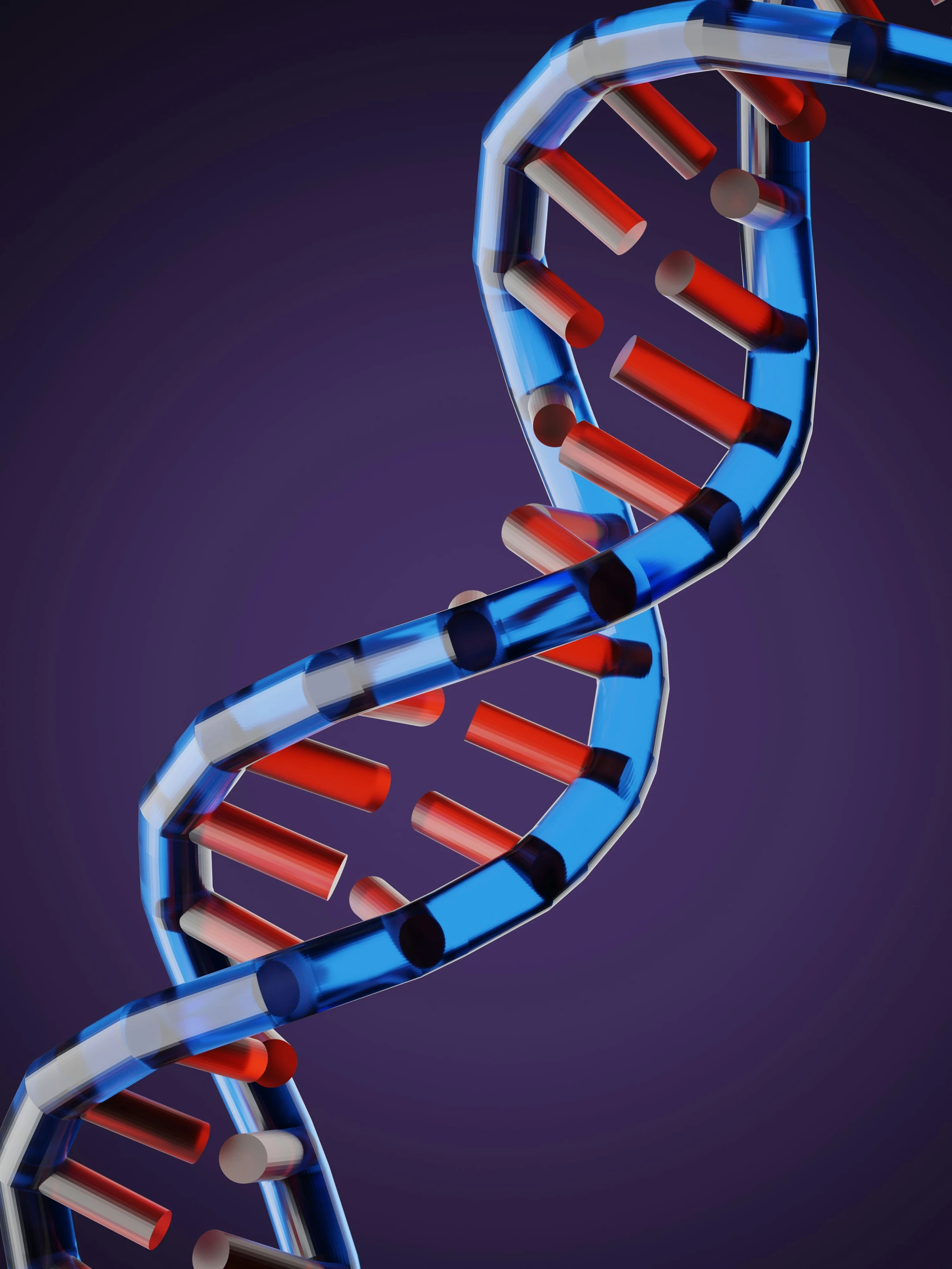
David Blakeslee recently led the Men’s Group in a viewing and discussion of Gattaca, a neglected, underrated, and possibly prophetic science-fiction movie. Gattaca’s title provides a subtle hint about its theme, as the letters in the title are taken from the first letter of each of DNA’s four building blocks - guanine, adenine, thymine, and cytosine. Gattaca portrays a dystopian future in which, from conception to the grave, genetic engineering controls everyone’s life. As you watch the movie you can almost imagine a demonic power, in a fiendish imitation of God’s providence, using genetic engineering to dominate and deceive, rather than to benevolently guide and save, each of us.
You may be surprised to learn Gattaca makes me think of one of the loveliest sections of Paradise Lost. Paradise Lost, published in 1667, is John Milton’s imaginative re-telling of the Fall of man, beginning with Satan’s expulsion from heaven, transitioning to his scheme to corrupt Adam and Eve, and ending in the fallen couple’s own expulsion from the Garden of Eden. Though Paradise Lost has its faults - Satan is portrayed in too heroic a fashion for many readers, including me - the book is nonetheless one of the greatest works of English literature, renown for the beauty of Milton’s writing and its theological depth. One of my favorite scenes occurs about mid-way through this epic poem, when Milton imagines Adam and Eve, before the Fall, retiring for the evening and going to sleep. This entire, exquisitely beautiful scene covers 3-4 pages and is too long for the Friday letter. The last sentence of the passage is the one I always remember, and the one which makes me think of Gattaca: “Sleep on, Blest pair; and O yet happiest if ye seek No happier state, and know to know no more.”
The phrase “and know to know no more” gives us a great opportunity to think about wisdom. Satan tricked Adam and Eve, whose great mistake was to desire to be like God, so Adam and Eve ate the fruit of the forbidden tree, and thus learned the knowledge of Good and Evil. Humanity’s quest for knowledge can still be a desire to become like God. From the knife to the spear, from the bow and arrow to the catapult, from gunpowder and firearms to the atom bomb, everything which we have learned has enabled us to invent new ways to inflict pain on others. Even worse, with each new invention our ability to harm others has expanded exponentially. You can only do a limited amount of harm with a knife. With an atom bomb, well, that’s another story altogether.
Now we are confronted with artificial intelligence and genetic engineering, which go hand in hand more than you might think, since artificial intelligence expands our ability to perform genetic engineering. Even now, experiments are being done to use genetic engineering to prevent and treat genetically inherited diseases. Most people agree with this therapeutic use. However, genetic engineering, once we know how to use it well, will lead to the temptation to create designer children. The crossing of that Rubicon may have the potential to alter or even destroy what it means to be human.
Gilbert Meilaender, a member of the President’s Council on Bioethics from 2002 - 2009, uses three different words - procreation, reproduction, and manufacturing - to provide a good intellectual framework around which to discuss conception and childbirth. Procreation, a term more commonly used in my parent’s generation than my own, tacitly directs our attention to God as the giver of children. As part of the Imago Dei we imitate God’s creative process when we have a child. Rightly conceived - pun intended - men and women procreate. The second word, reproduction, is now the term used most often to discuss childbirth. To say humans reproduce removes any distinction between humans and lower living creatures and neglects to note God’s image in us, thus degrading what it means to be human. Fish, dogs, monkeys, and all other lower animals reproduce, but since they lack the Imago Dei, they can never procreate. Genetic engineering, dancing cheek to cheek with eugenics, leads us to the third word - manufacturing. Manufacturing takes the final step and destroys what remains of our humanity, turning our children into just another product obtained from a genetically skillful scientific factory. Just like when we order a new car, specifying the exact options we think we want, genetic engineering, when it comes to full fruition, will enable us to build the exact child we think we want. Is it too much to think, just as lemon laws exist for new cars which end up being defective, we may one day have lemon laws for babies who do not turn out to be what we ordered? Children who are judged defective? Children who don’t “work” well, certainly not up to their design’s standards? Rather than accepting as a gift the child given to us by God, genetic engineering has the potential to become another tool which enables us to try and be like God, thus replacing God’s wisdom with our own. The mind both reels and shudders. An atom bomb, though unthinkably catastrophic, can only take people’s lives. Genetic engineering has the potential to destroy the very meaning of our human nature, making it perhaps the most destructive weapon of all.
We often hear people speak with pride about living in the Information Age. I yearn for the day, impossible on this side of the Jordan, in which we live in the Wisdom Age, and know to know no more. Since we do not yet reside in the new heaven and the new earth, consider joining me as I pray for wisdom to rest contently in God’s care.